The full review
A Trinidadian mystery from one of the pioneers of Black British cinema is finally getting its U.S. premiere. On December 12, 2026, the African Diaspora International Film Festival will screen Sir Horace Ové’s final film,
The Ghost of Hing King Estate, in New York. Its distributor, ArtMattan Films, dates it to 2007. That’s nearly two decades between the date on the film’s listing and the night it gets introduced to an American festival audience.
The gap caught my attention for a reason. In writing about
Possession, I kept coming back to how easily a Jamaican-set series could pass me by. I was already looking for the kind of story it had to offer, and I still had to go digging to find it. Ové’s film raises a different version of the same question: when Caribbean stories are already out there, how do the people who would make time for them even hear about them?
A mystery about what happens after people decide who to blame
In
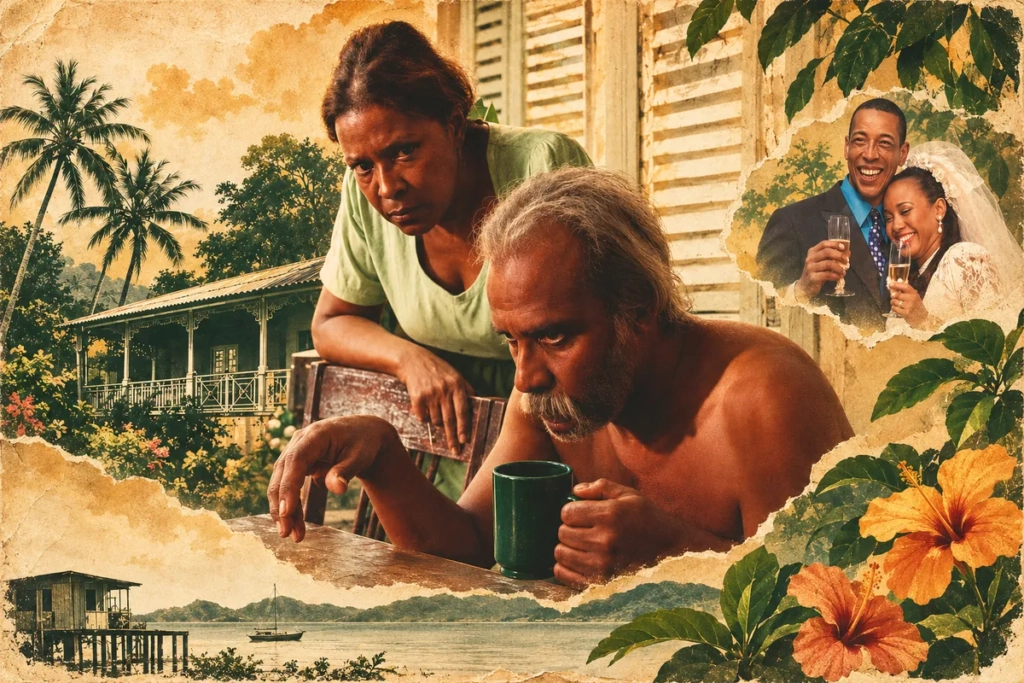
ArtMattan’s synopsis, six people die under mysterious circumstances on an estate in Las Cuevas, Trinidad. ArtMattan dates the events that inspired the film to 1971. Suspicion falls on Carmelle, the overseer’s wife, and neighbours tie their accusations to obeah. The film, written by Francis Escayg and shot in Trinidad, was inspired by actual events. The accusation is part of the story, not evidence of what happened.
What interests me about that premise is what happens after people have settled on an explanation. A mystery usually promises that once the truth comes out, everybody will see things differently. Escayg points to a more uncomfortable possibility in the distributor’s notes: clearing up what happened doesn’t necessarily clear a person’s name. Once people have spent years telling the same story about a woman, what would it cost them to admit they had it wrong?
That’s a good reason to put the film on a watchlist. Here is a Caribbean story with something specific to say about rumour, belief and the grip a community can have on somebody’s reputation. This preview draws on the festival programme and the distributor’s materials rather than a viewing of the full film.
The part of Horace Ové’s career that’s harder to see
Ové was born in Belmont, Port of Spain, and moved to Britain in 1960. The
British Film Institute’s guide to his work identifies
Pressure as the first feature made by a Black director in Britain. It follows a British-born teenager in London whose parents are from Trinidad.
The Ghost of Hing King Estate puts Trinidad itself at the centre, and it makes a good case for looking beyond the title that usually introduces Ové to new audiences.
The film isn’t new to Trinidad and Tobago. The
Trinidad+Tobago Film Festival has screened it, and the BFI notes that it has seldom been shown since its early screenings or release. The BFI dates the film to 2009 while ArtMattan’s catalogue lists 2007. Neither date makes New York the film’s first screening; December’s event is its
U.S. premiere. I haven’t found a documented explanation for the full gap.
Where to watch The Ghost of Hing King Estate
The
festival’s official programme lists the screening for
Saturday, December 12, 2026, at 8 p.m. New York time, in the chapel at Teachers College, Columbia University. Actor Michael Cherrie is scheduled to take part in a Q&A. The same Trinidad and Tobago spotlight begins at 6 p.m. with
The Seas Between Us and
Dancing on Steel. Check the festival listing for tickets and any schedule changes.
For everyone outside New York, there’s a trailer on
ArtMattan’s film page. The distributor also lists an institutional streaming option. That’s different from a home-viewing release: as of November 22, I couldn’t verify a consumer streaming or rental option in the U.S., the UK, Canada, the Caribbean or Japan. The New York screening doesn’t come with a confirmed online date.
What happens after the festival?
When I wrote about
what a Caribbean production studio could look like, I was thinking about the stories we could make if more of us had the backing to make them. Ové’s film makes me think about what happens to the work after it’s made. A premiere is a chance to build an audience. After the festival, the film still needs somewhere for that audience to go.
A cinema booking in another city would help. So would a rental with a clearly listed set of countries, or a library licence that a university film club can actually find. Each reaches a different audience. If somebody in Kingston sends a trailer to a cousin in Toronto, both should be able to tell from the same page whether they can see the film, and where. That sounds like a small thing until you keep finding Caribbean films whose trailers you can watch and whose full stories you can’t.
For now, there’s a confirmed night in New York. The next date I want to see is the one that tells the rest of us when we can watch.
Screening and viewing information checked November 22, 2026. This is a festival preview, not a review.