
The Dog Stars Review: There’s More to Life Than Making It Through the Night
The Dog Stars
Ridley Scott’s post-apocalyptic drama makes room for tenderness amid the wreckage. Jacob Elordi, Josh Brolin and a dog named Jasper make the quiet moments count.
Other / not applicable
The verdict
A thoughtful, beautifully shot survival drama whose tenderness makes a stronger impression than its action.
The full review
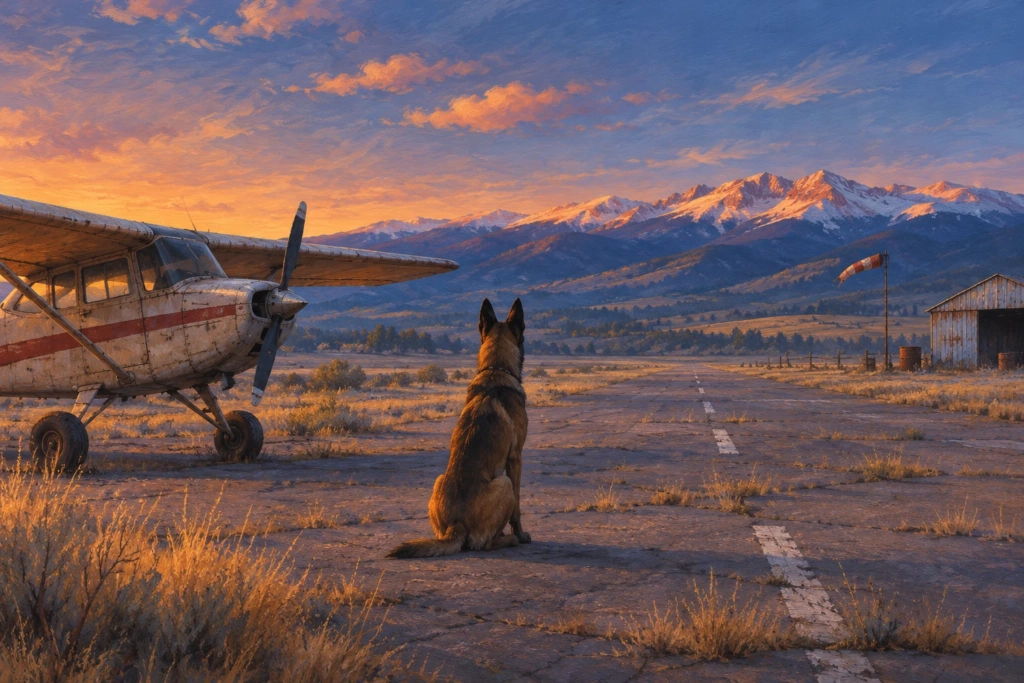
The first thing Ridley Scott makes convincing in The Dog Stars isn’t the end of the world. It’s the routine that comes after it. A man flies a small plane over Colorado. Another keeps watch at an airfield. A dog named Jasper goes where his person goes. They have a system, and it works. The trouble is that a system can keep you alive without giving you much to live for.
I really liked The Dog Stars. It has the bones of a survival thriller, but its best moments come when nobody is running or shooting. What makes the film worth recommending is how seriously it takes a quieter fear: that if you get good enough at surviving alone, you might forget what it feels like to want company.
An airfield is a good place to hide. It’s a hard place to call home.
Adapted from Peter Heller’s novel, the film follows Hig (Jacob Elordi), a pilot living at a remote airfield after a pandemic. He shares the place with Bangley (Josh Brolin), a military survivalist, and Jasper. Then a mysterious radio transmission gives Hig a reason to wonder who else might be out there, and whether staying put is still the safest choice in any sense that matters. 20th Century Studios
Elordi plays Hig as a man who can handle the practical work of survival but hasn’t found anything practical to do with his grief. Those are different skills, and the performance makes room for both. He’s capable enough that his decision to follow the radio signal doesn’t feel like simple recklessness. He knows what he could lose. He’s beginning to understand what he’s losing by staying.
Brolin gives the film its dry edge. Bangley is easy to read as the hard man who needs to learn a lesson about compassion, but he has a point: the rules that frustrate Hig are also the rules that have kept them alive. The relationship works because neither man can afford to dismiss the other. And then there’s Jasper, who brings something to the airfield neither of them can supply on their own: uncomplicated affection. He makes the place feel inhabited rather than merely defended.
The wide-open country makes the rooms feel smaller
The aerial shots do more than give the film scale. Up in the plane, Hig can see far beyond the small patch of ground he and Bangley keep secure. That makes the airfield look less like the whole world and more like one choice within it. Scott lets the landscape be beautiful without pretending it’s welcoming. There’s a real difference between being able to see for miles and knowing where it’s safe to land.
Margaret Qualley’s Cima brings that uncertainty down to earth. Where Bangley asks Hig to think about who might hurt him, Cima gives him a reason to consider what it would cost to trust somebody again. Qualley doesn’t play her as a reward for the hero finally leaving home. She has her own reasons to be cautious. That gives their scenes a tension the film doesn’t need a gun to create. Associated Press review
A slower film than the premise promises
The pace won’t work for everyone. Variety’s Guy Lodge found the film too low on energy to sustain its approach. There are stretches where the story seems content to sit with the same feeling, and some of the later danger is more familiar than the relationships Scott takes his time building. If you come for a relentless thriller, you may spend a fair bit of it waiting for that film to start.
But the slower rhythm is a large part of why this one works. It lets you understand the appeal of Hig’s routine before asking him to break it. More action might make for a tighter thriller. It would also make it easier to miss why hearing another voice on a radio is such a big deal.
Verdict: The Dog Stars is a thoughtful, beautifully shot survival drama with more tenderness than its premise suggests. What gives it weight isn’t the question of whether Hig can make it through another day. It’s whether the next day has to look exactly like the last one.